Friday, April 29, 2016

Fuel Cell charger that's pocket friendly


Battery chargers aren't exactly the sexiest gadgets in the world, but when you add fuel cells into the mix things get a little more interesting.

MyFC is showcasing its Jaq fuel cell charger at MWC 2016, the world's smallest charger of its type. The device, which has gotten its European debut, offers up speedy phone charging without the need to ever go near a plug socket.

This is because Jaq powers itself with the help of its own PowerCard - which is made of water and salt. Stick this in the charger and by some chemical magic hydrogen is created and your charging can begin. It will charge a phone in the same time as a normal power outlet.


While chemical reactions and hydrogen sound a touch dangerous, MyFC promises that not only is the chemical reaction completely safe, it is also environmentally friendly.

The MyFC Jaq is compatible with all phones and tablets, including iOS, and will be available in white, black and purple.


Although there's no release date as of yet, MyFC has put the Jaq up for pre-order, where you can also sign up to having Power Cards sent to you on a subscription basis.
Google plans to beam 5G internet from solar drones
Trials at New Mexico’s Spaceport Authority are using new millimetre wave technology to deliver data from drones – potentially 40 times faster than 4G
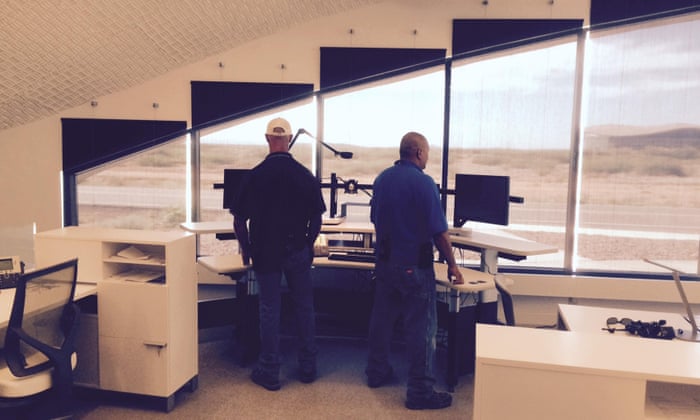


he flight control office at the New Mexico Spaceport Center where Google has been testing solar-powered drones. Photograph: New Mexico Spaceport Authority

Google is testing solar-powered drones at Spaceport America in New Mexico to explore ways to deliver high-speed internet from the air, the Guardian has learned.

In a secretive project codenamed SkyBender, the technology giant built several prototype transceivers at the isolated spaceport last summer, and is testing them with multiple drones, according to documents obtained under public records laws.

In order to house the drones and support aircraft, Google is temporarily using 15,000 square feet of hangar space in the glamorous Gateway to Space terminal designed by Norman Foster for the much-delayed Virgin Galactic spaceflights.

The tech company has also installed its own dedicated flight control centre in the nearby Spaceflight Operations Center, separate from the terminal.
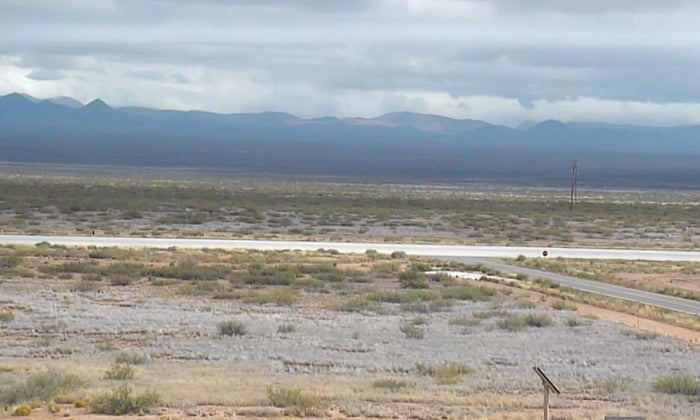


View of the runway from the Spaceflight Operations Center control tower Photograph: New Mexico Spaceport Authority


Based out of the site near the town called Truth or Consequences, Project SkyBender is using drones to experiment with millimetre-wave radio transmissions, one of the technologies that could underpin next generation 5G wireless internet access. High frequency millimetre waves can theoretically transmit gigabits of data every second, up to 40 times more than today’s 4G LTE systems. Google ultimately envisages thousands of high altitude “self-flying aircraft” delivering internet access around the world.

“The huge advantage of millimetre wave is access to new spectrum because the existing cellphone spectrum is overcrowded. It’s packed and there’s nowhere else to go,” says Jacques Rudell, a professor of electrical engineering at the University of Washington in Seattle and specialist in this technology.

Google's drones have exclusive use of the Spaceport’s runway and will even venture above a neighbouring missile range
However, millimetre wave transmissions have a much shorter range than mobile phone signals. A broadcast at 28GHz, the frequency Google is testing at Spaceport America, would fade out in around a tenth the distance of a 4G phone signal. To get millimetre wave working from a high-flying drone, Google needs to experiment with focused transmissions from a so-called phased array. “This is very difficult, very complex and burns a lot of power,” Rudell says.

The SkyBender system is being tested with an “optionally piloted” aircraft called Centaur as well as solar-powered drones made by Google Titan, a division formed when Google acquired New Mexico startup Titan Aerospace in 2014. Titan built high-altitude solar-powered drones with wingspans of up to 50 metres.

Emails between Spaceport America and Google project managers reveal that the aircraft have exclusive use of the Spaceport’s runway during the tests and will even venture above the neighbouring White Sands Missile Range.

Google spent several months last summer building two communication installations on concrete pads at Spaceport America. Project SkyBender is part of the little-known Google Access team, which also includes Project Loon, a plan to deliver wireless internet using unpowered balloons floating through the stratosphere.

One of the millimetre wave transceivers was located near Spaceport America’s Spaceport Operations Centre (SOC), and the other four miles away at the Vertical Launch Area (VLA), although Google’s plans did not involve any rockets. Google also established a repeater tower and numerous other sites around the Spaceport, presumably to test millimetre wave reception.

Both installations have cabinets full of computer servers and other electronics, while the pad at the SOC required a concrete base to support a dish antenna nearly eight feet across, according to a separate filing with the Federal Communications Commissions (FCC).
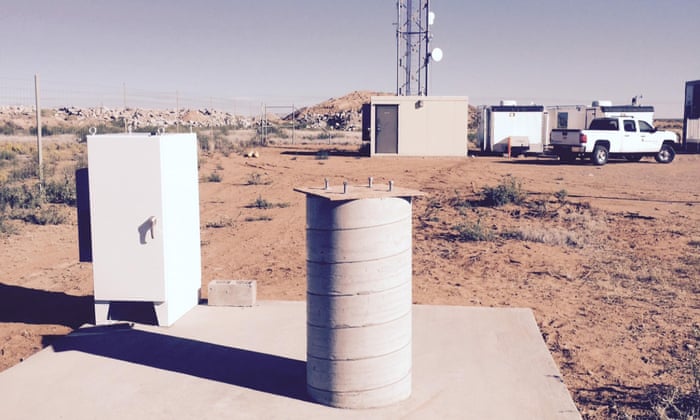


One of Google’s installations at the spaceport. Photograph: New Mexico Spaceport Authority

Work did not proceed smoothly, however. At one point in late August, a lorry showed up at 10.30pm, causing the Spaceport America team to complain to Google: “We have no loading dock and no means to remove a pallet … from the middle of the truck.” The lorry was turned away without making its delivery.

Later, components were installed upside down or supplied by Google without the necessary shelves, nuts and bolts. Near the end of the build in October, Mike Bashore, information systems manager at Spaceport America, even emailed to his Google contact, “We want to run out to Home Depot for grounding straps.” These are needed to protect sensitive electronics from static electricity. The nearest Home Depot hardware shop is over 100 miles from the Spaceport.

Google is not the first organisation to work with drones and millimetre wave technology. In 2014, Darpa, the research arm of the US military, announced a program called Mobile Hotspots to make a fleet of drones that could provide one gigabit per second communications for troops operating in remote areas.

Google has permission from the FCC to continue its tests in New Mexico until July. Spaceport America will be glad of the $300,000 SkyBender tests, as Virgin Galactic virtually mothballed its terminal following the 2014 crash of its prototype SpaceShipTwo vehicle in California. Christine Anderson, chief executive officer of Spaceport America, admits that the facility is now running out of money.

“We are transitioning to supporting all aspects of the spaceport from our operational budget, as the [state] bonds have been spent except for the amount reserved for the southern road,” she wrote in a blog post earlier this month. “We are asking the legislature for $2.8m ... We appreciate that our request is a lot of money, but we also feel that it is a relatively small amount to protect the state’s $218.5m investment already made in the new and exciting commercial space industry.”

Google is paying Virgin Galactic $1,000 a day for the use of a hangar in the Gateway to Space building but had to split its SkyBender tests into two separate flight campaigns to ease Virgin Galactic concerns. An unnamed Virgin Galactic executive emailed Anderson before the tests to note: “We will be arranging numerous activities around these occupancy periods, which would be impacted if there was any [timing changes].” Google also had to promise not to take any photographs inside the building.

Anderson expects Virgin Galactic to unveil its new SpaceShipTwo at the Spaceport in February, and to begin flights there in 2018.

Google declined to comment.

Tuesday, April 26, 2016

Mitsubishi Electric's "aerial display" projects images into mid-air


As soon as the year 2020, you may be seeing advertising or other imagery floating before you. That's when Mitsubishi Electric hopes to have its "aerial display" technology perfected and commercially available. Already, it's capable of displaying images measuring up to 56 inches (142 cm) diagonally, hovering in the ether.

Here's how the aerial display system works …

The image, which can be a still or video, is displayed on a screen that sits perpendicular (and unseen) to the human viewer. Sitting diagonal to that screen is a beam splitter, which is a glass device that splits beams of light in two.

As a result, when the screen image is reflected off the back of the beam splitter, it becomes two duplicate images. These are in turn reflected off a retro-reflective sheet and through the beam splitter, converging in the air in front of the viewer. This causes the viewer to perceive a single image, dangling before them.

According to the designers, however, people find it hard to focus on such images when there's no way of telling where the image is. With that mind, the system also includes "guide images" that are projected onto walls (or other fixed surfaces) to either side of the floating image. Because viewers "get" where those images are, they can focus on them and then also on the aerial image between them.

The entire display area, including the two guide images, measures 90 inches (229 cm) diagonally.

Similar technology is utilized by the University of Tokyo's HaptoMime system, in which users can seemingly reach into a mid-air display.

Source: Mitsubishi Electric
This Incredible Pen Lets You Write In Any Color You See
The front door on our 100-year-old house is painted a great shade of red, but there's a big chip out of it. I've been wanting to touch up the spot, but how to get the right paint color? A photo would be way off, and I'm kind of afraid to scrape off another, bigger chip to take to the paint store.

Soon, I -- and all who have color quandaries -- may have a solution. It's called the Scribble and it's a new kind of pen that can sample any color you point it at and then let you draw in that color. There are two types of Scribbles planned: one with an ink cartridge that will let you draw on paper with your captured color, and a stylus version that will let you splash color around on your mobile device's screen when the Scribble+ app is installed.

Both versions will use Bluetooth technology or Micro-USB cables to communicate with your computer and other devices, and will measure about 6.3 inches long. A Scribble pen uses 16-bit color sensors to sample the world and can store up to 100,000 different colors.

The version that draws on paper has a built-in ink cartridge that will squirt the right mix of colors into a mixing chamber before it passes on to the page. The pens themselves will also be available in a variety of body colors, natch.

The inventors of the device, Mark Barker and Robert Hoffman, will soon be launching a Kickstarter campaign to fund their device. Early backers will get 20 percent off the planned price of $149.95 (roughly £89, AU$160) for the ink version and $79.95 (roughly £48, AU$85) for the stylus. Interested individuals can sign up on the Scribble website to be notified of the campaign kickoff by email.

I'd think artists would love a gizmo like this. How cool would it be to paint a flower with a pen that takes the exact colors from nature and puts them down on a piece of paper? For another use, in a press release about the pens, an interior decorator from Boston known mysteriously as "Emily G." says: "This would be the perfect device to help me easily scan and save color samples for client presentations. Being able to quickly match existing colors off walls and swatches with the Scribble Pen is going to be brilliant."


Microsoft announces 3 business productivity apps for Android smartphones
With more number of people using smartphones to manage their business nowadays, Microsoft has launched 3 smartphone business apps that can help small businesses become more productive. Recognizing the growing use of the Android OS on smartphones across the World, Microsoft has announced these business productivity apps for the Android platform to start with.

The apps named as Sprightly, Connections and Kaizala are built to address SMB needs for a better digital presence, business relationships, team management and business transactions. These business apps are courtesy of Microsoft’s innovative team from Garage.
Sprightly, Connections and Kaizala
Sprightly – Makes professional content for your business and personal needs


Starting with Sprightly, it helps to create a better looking digital-content for your business needs. Business users can create a catalog for their products or share price-list with buyers using Sprightly.

Android

Sprightly also allows users to create and send ecards to family, friends & customers on festive occasions. Moreover, the content you create, can be easily shared on multiple platforms including WhatsApp and Facebook.

Connections – A perfect sales tool

As the name suggests, Connections is all about managing the details of your business connections in an organized manner. If you are a Vendor, retailer or supplier, you can use Connections to remember the order and customer information or categorize contacts with tags to auto-organize and broadcast SMS to groups of contacts for propagating your sales offer.

Android

What more, but you can also set reminders for each contact as a reminder to follow-up for your quotations.

Kaizala – A simple chat application for your team

Kaizala is productive chat application that support free team conversation and help you keep a track of every individual task. This is especially useful for small business owners whose job demand frequent tours and customer visits and while they are on the run, Kaizala allow for a better synchronization with their team to manage their day-to-day business on chat.

Android

Sprightly, Connections and Kaizala are currently available only on the Android platform. While Microsoft says that these apps will be shortly available on the iOS platform, there is no such commitment if you are a Windows Phone user.
A way to escape from air accidents.


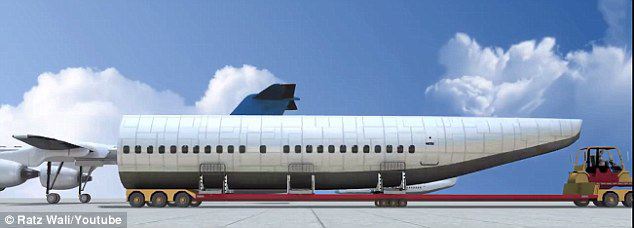
The disaster befalls the people in recent years have been due to some people, are afraid implicitly flights. If you are one fears this article will be of interest to you. Throughout the past year, the Ukrainian airline flights a danger if Vladimar Tataranko engineer has been able to introduce to the world a new creation made various experiments on the protection of human life. When the plane takes off or landing or flying ataraturdī time in case of a dangerous situation inside the aircraft passenger cabin from the plane to remove a little while, and passengers safe means of parachutes have been involved specialness of this new design a few seconds. This has the potential of landing safely, even on land or water. This is a very valuable life-saving aircraft engineers often praised worldwide as a plan. Any attempts by an accident much air they produce are safe to produce aircraft engineers had no passengers on the R-axis can be. The owner explains that the design, but the current arrangement in accordance with the standard gun aircraft containing carbon compounds and various aircraft features all the latest product akārayenma using aircraft with parachutes in the plane can bear the weight of. The plane has been allocated space within the passenger cabin to the lives of the passengers in addition to the safety of their belongings and valuables. This accident, therefore, enables passengers to save lives and integrity of human beings in their own cargo belonged.

Express their views on a large number of scholars from around the world and is designed as those cherished wish that this were accustomed's not so practical. How to accident aircraft pilots his survivors also, the aircraft production for people's safety with if the passenger cabin with a portion upon the mountain or tall building to be questioned by some and how avoid that, where creators replied solution most favorable to the problems of the near future began to hope that assess.


Ukraine is safe from the first flight has not Tataranco last year obtained the license of the patent for the design. The research revealed that, according to information obtained jangahanayen done 95% of the cost of many of the statements that will engage ārakṣakārīva flights. But the architect said, as attack aircraft or rockets, if a fire in the plane and use can not be separated from the plane of the passenger cabin.