Tuesday, May 3, 2016

Total War: Warhammer  Review
Next installment in the epic strategy game series, introduced by Creative Assembly in 2000. After a series of titles set in different historical periods, the developers decided to take players into one of the most famous fantasy universes, created by the Games Workshop company. In the dark universe of Warhammer, different races constantly fight for power and world domination, unaware of the fact that the real threat comes from a mighty force from the north. The game lets become the leader of one of several races, including humans, orcs, goblins, dwarves, vampires, and others. Disregarding the fantasy elements, the gameplay does not differ significantly from the previous games in the series, with epic real-time battles lying at its core. Between the battles the gameplay switches to a turn-based mode, where on a world map you develop your country, its economy, and establish diplomatic relations with other nations.
Total War: Warhammer PC Games Image 2/58, Creative Assembly, SEGA

Story
In this universe, several different races wage war against each other to take control over the Old World, while keeping at bay the demonic forces of Chaos that invade the realm. There are four playable factions in the game, each one with a powerful leader. Humans from the Empire are led by the emperor Karl Franz, whose aim is to unite the broken forces of Prince-Electors. Grimgor Ironhide leads a cruel army of orcs and goblins. High King Thorgrim commands the dwarves, armed with advanced technology based on gunpowder and steam. Finally, the cunning vampires, leading their undead armies, are under the command of Mannfred von Carstein.
Total War: Warhammer PC Games Image 3/58, Creative Assembly, SEGA
Gameplay
Gameplay is not much different from what we saw in recent Total War games. The turn-based gameplay revolves around managing your territories – gathering resources, expanding cities, developing new technologies, trade, diplomacy, recruiting troops and moving armies, etc. At least, that's how the game looks in the model case (the humans), as each race requires a different approach. For example, while playing as the orcs the infrastructure development fades into the background, and the key aspect of "economy" becomes the so-called Waaagh! – the primal battle cry of the greenskins, which becomes an ersatz resource.
Total War: Warhammer PC Games Image 9/58, Creative Assembly, SEGA

 The often you engage in combat and win, the more warriors will flock under your command, however, if you start slacking off and lose most of your battles, your armies will melt like snow in spring (e.g. your warriors will pick up fights with each other out of boredom). Each faction has its agents, who serve an important role on the world map. These are the special units, coming in different sorts. They can move around on their own, develop their skills as they succeed in their tasks, and can also take part in battles.
Total War: Warhammer PC Games Image 5/58, Creative Assembly, SEGA
The battles are the second pillar of Warhammer: Total War. They are very spectacular and fought in real time – the visuals have been significantly improved, in comparison to the previous installments in the series. Not only thanks to the advancement in technology, but also the increased variety of units taking part in battles. Depending on the chosen faction, you can use numerous types of infantry and cavalry, more or less conventional siege weapons, artillery, as well as giant beasts and flying creatures. Another novelty are heroes, who can now take part in battles (the abovementioned agents), with heavy emphasis being put on spellcasters, who can utterly change the situation on the battlefield with their devastating magic.
Total War: Warhammer PC Games Image 6/58, Creative Assembly, SEGA
Game modes
The game is not set in any particular moment in history of the Warhammer universe. The campaign has a sandbox-like structure, and the player shapes the game's story by completing selected missions. Missions can also represent some canonical events that happened in the history of the Old World (e.g. the Storm of Chaos) and often provide your heroes with powerful artifacts or aid your faction in other ways.


Friday, April 29, 2016

Homefront: The Revolution

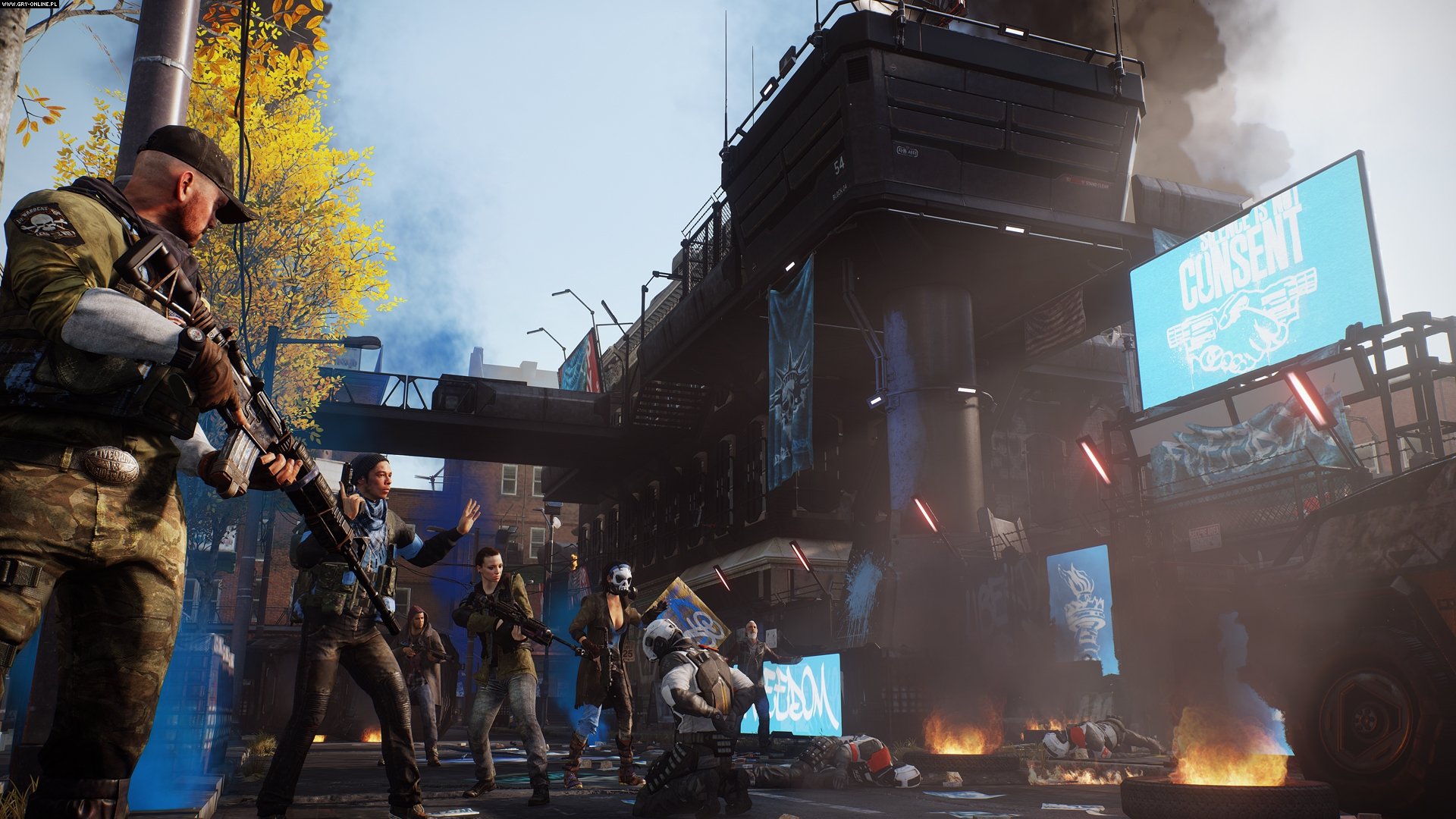
Homefront: The Revolution for PC / Windows tries a new approach to an FPS franchise which debuted in 2011 and gained significant popularity among the players, despite receiving rather mediocre reviews. This next title was developed by Dambuster (formerly Crytek UK), who stepped in for the creators of the first game, Kaos Studios. After the original publisher, THQ company, went bankrupt, the franchise was bought by Crytek and then Deep Silver company, making it possible to expand the series by another installment
Homefront: The Revolution PC, PS4, XONE Games Image 4/29, Deep Silver Dambuster Studios, Deep Silver / Koch Media
Homefront: The Revolution release date for PC:
  • Game language: English
  • 17 May 2016 | Worldwide
  • 20 May 2016 | Europe
  • 17 May 2016 | USA
  • Game mode: single / multiplayer , multiplayer mode: Internet, players: 1 - 4 
Story
The story focuses around an imaginary conflict between North Korea and the United States. It's been four years since the USA has fallen to the invaders and the constantly growing forces of the resistance are preparing a huge revolution against the oppressor. You are thrown into the devastated streets of Philadelphia, where you join the local resistance and sabotage every major enemy objective in any way you can. The game features brand new characters who, either solo or in cooperation with others, try to hold their ground against a much more numerous and better equipped Korean army.
Homefront: The Revolution PC, PS4, XONE Games Image 5/29, Deep Silver Dambuster Studios, Deep Silver / Koch Media
Game modes
Apart from the main story campaign, which can be played in single player mode or in cooperation for up to 4 players, Homefront: The Revolution on PC / Windows also features competitive multiplayer with several game modes available.
Homefront: The Revolution PC, PS4, XONE Games Image 6/29, Deep Silver Dambuster Studios, Deep Silver / Koch Media
Technology
Homefront: The Revolution is powered by the CryEngine 4, enabling the game to truly spread its wings on the most powerful PCs and the eight generation consoles. This resulted in very detailed environments, superior sound and high quality visuals.
Homefront: The Revolution PC, PS4, XONE Games Image 7/29, Deep Silver Dambuster Studios, Deep Silver / Koch Media
Gameplay
Unlike the previous game, which was linear in its structure, Homefront: The Revolution for PC / Windows is set in an open-world environment. The order of missions and the way they are completed are mostly up to the player. As a member of the resistance you can recruit new people to aid your cause. Apart from dynamic combat, in which you use various weapons and vehicles, it is often necessary to go in guerilla style and keep a low profile while operating behind the enemy lines. Your hideout doubles as your headquarters; that's where you improve your gear and weapons in between missions.

The Witness (PC )


The Witness for PC / Windows is a first-person adventure game that puts emphasis on solving puzzles, which is similar in this regard to the classic logic-adventure games series entitled Myst. It was created by independent studio Number None founded by Jonathan Blow, who previously developed one of the most interesting logic platform games in recent years – namely Braid, released in 2008. Initially, the title was designed for different platforms, of both current and past generation, but ultimately it came out for PC and PlayStation 4, and a couple of months later also on mobile devices.
The world definitely looks beautiful. - 2016-02-03

Story
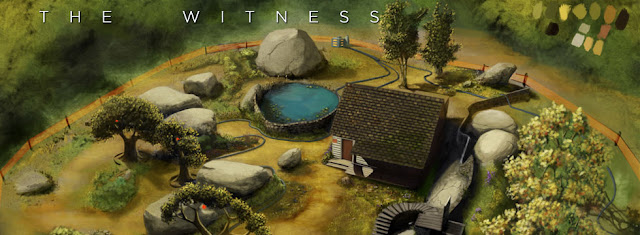
The game is set on a pretty large island, which you can explore freely in search of puzzles to solve. The island is very mysterious and, despite many traces of someone’s presence, seems completely deserted. As you find more clues (e.g. audiologs) hidden here and there, and solve various new logic puzzles, you learn more about the place itself and the island’s secrets.
Some riddles are pretty easy, but the further you go, the more you’ll have to push yourself to your mental limits. - 2016-02-03

Technology
Unlike Number None’s first game, which was fully 2D, The Witness for PC / Windows offers simple, but very charming 3D graphics. What's more, using first-person perspective allows for even greater immersion in the game’s atmosphere.
Virtual piece of paper helps you with traveling around the location, but a real one might actually be helpful with solving some puzzles. - 2016-02-03

Gameplay
The Witness uses FPP view, and the gameplay focuses on exploration (on foot or by boat) of every nook and cranny of the island, finding various hints, and solving logic puzzles in order to lower a bridge, activate a mechanism, open a door, etc. Similarly to the aforementioned Myst games, The Witness for PC / Windows requires logical thinking from the player, but there's more. As you explore the island, you have to prove to be remarkably patient, observant, and able to connect seemingly unrelated elements of the story. Many things here have a secret meaning, and the key symbols, hints and markings that let you push the plot forward are smartly hidden within the game’s environment. What makes things even more difficult is the fact that there is no hint system for the player, so you can only count on yourself.


Tuesday, April 26, 2016

The Witcher 3: Blood and Wine


The Witcher 3: Blood and Wine is the second major expansion for The Witcher 3: Wild Hunt, an action RPG that came out in spring 2015. It was developed by CD Projekt RED, the creators of the original game as well as all installments of The Witcher series, which are based on the novels written by Andrzej Sapkowski, a famous Polish fantasy writer. The add-on offers additional tens of hours of gameplay.
The Witcher 3: Blood and Wine PC, XONE, PS4 Games Image 2/8, CD Projekt RED, Bandai Namco Entertainment
Blood and Wine for PC / Windows was officially announced a month before the premiere of the original game. Along with the first paid expansion, Hearts of Stone, it complements the list of over a dozen DLCs for Wild Hunt, most of which were given to the players at no additional cost. The production described herein is distributed both physically and digitally, separately or bundled with the aforementioned Hearts of Stone. The developers also prepared a special edition of The Witcher 3 that contains the vanilla game with all available expansions, minor and major alike.
The Witcher 3: Blood and Wine PC, XONE, PS4 Games Image 5/8, CD Projekt RED, Bandai Namco Entertainment
Story
The story of Blood and Wine takes us to the entirely new land called Touissant, one of the few countries in the Witcher universe that have not been touched by war. As it quickly turns out, the atmosphere of peace and bliss in Touissant is but an appearance. In fact, the duchy hides a dark and bloody secret, and thus, the White Wolf will have to face an evil that, once again, can be fought and defeated only by a witcher.
The Witcher 3: Blood and Wine PC, XONE, PS4 Games Image 3/8, CD Projekt RED, Bandai Namco Entertainment

Gameplay
Compared to The Witcher 3: Wild Hunt, Blood and Wine for PC / Windows does not introduce any major changes to the gameplay mechanics, save for a number of novelties, tweaks, and enhancements brought by the subsequent patches for the original game. Just like with Hearts of Stone, the first paid DLC for The Witcher 3, the expansion offers a completely new, multi-threaded plot which is comparable in size to that of The Witcher from 2007, the first installment of The Witcher series. Moreover, the game was supplemented with multitude of side quests, new treasures to find, bandit camps to loot, new equipment and Gwent cards, as well as entirely new NPCs. Unlike Hearts of Stone, the action of Blood and Wine takes place outside of the realms known from the vanilla game. Once we install the expansion, the duchy of Touissant will appear on the map.
The Witcher 3: Blood and Wine PC, XONE, PS4 Games Image 4/8, CD Projekt RED, Bandai Namco Entertainment
Additional information
In 2015, The Witcher 3: Blood and Wine received a grant of 150 thousand euros (7% of the budget, which totals to more than 2 million euros) from the Education, Audiovisual and Culture Executive Agency of the European Union. Given the fact that the first expansion for The Witcher 3 had a similar budget, it is easy to calculate that CD Projekt RED spent nearly as much money on the production and promotion of both add-ons as on the development of the first installment in The Witcher series, which cost about 20 million zlotys (around 5 million dollars).